Understanding the gravity-powered water transfer process
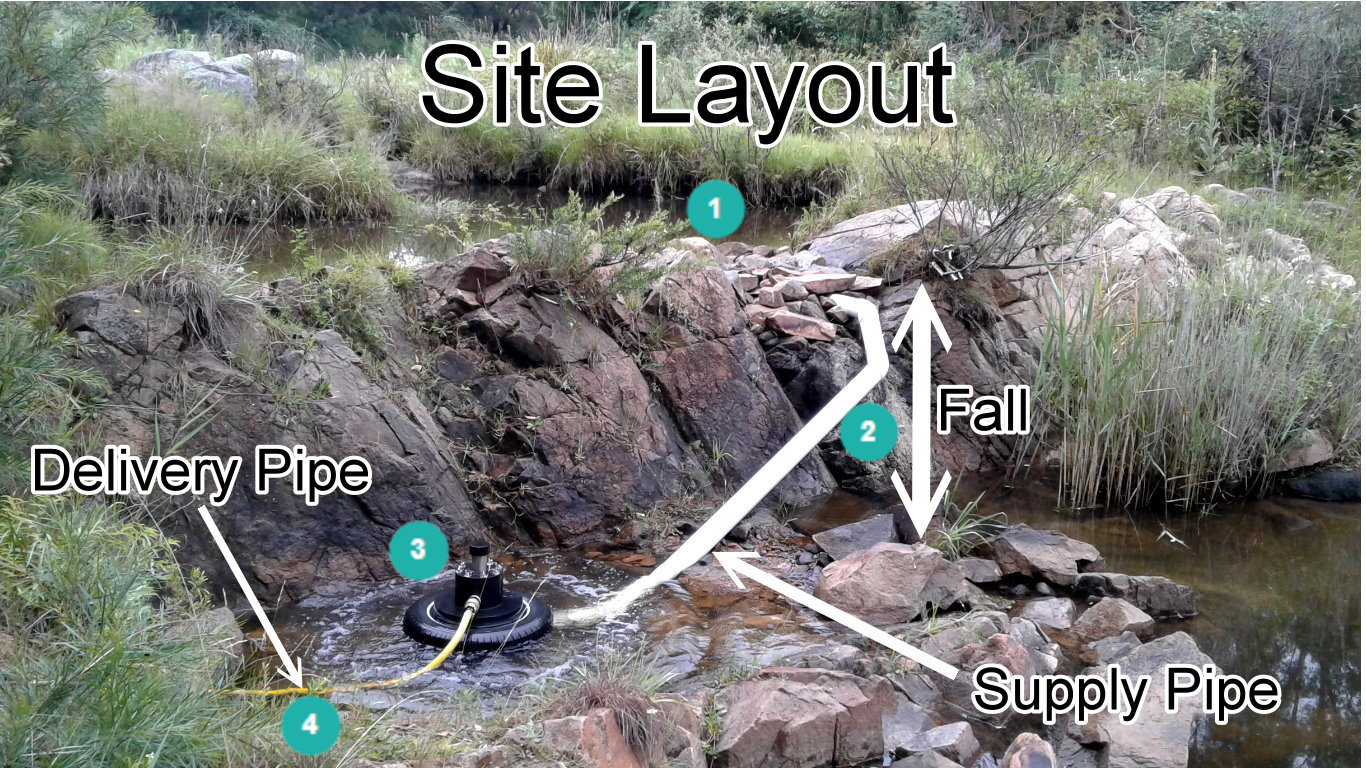
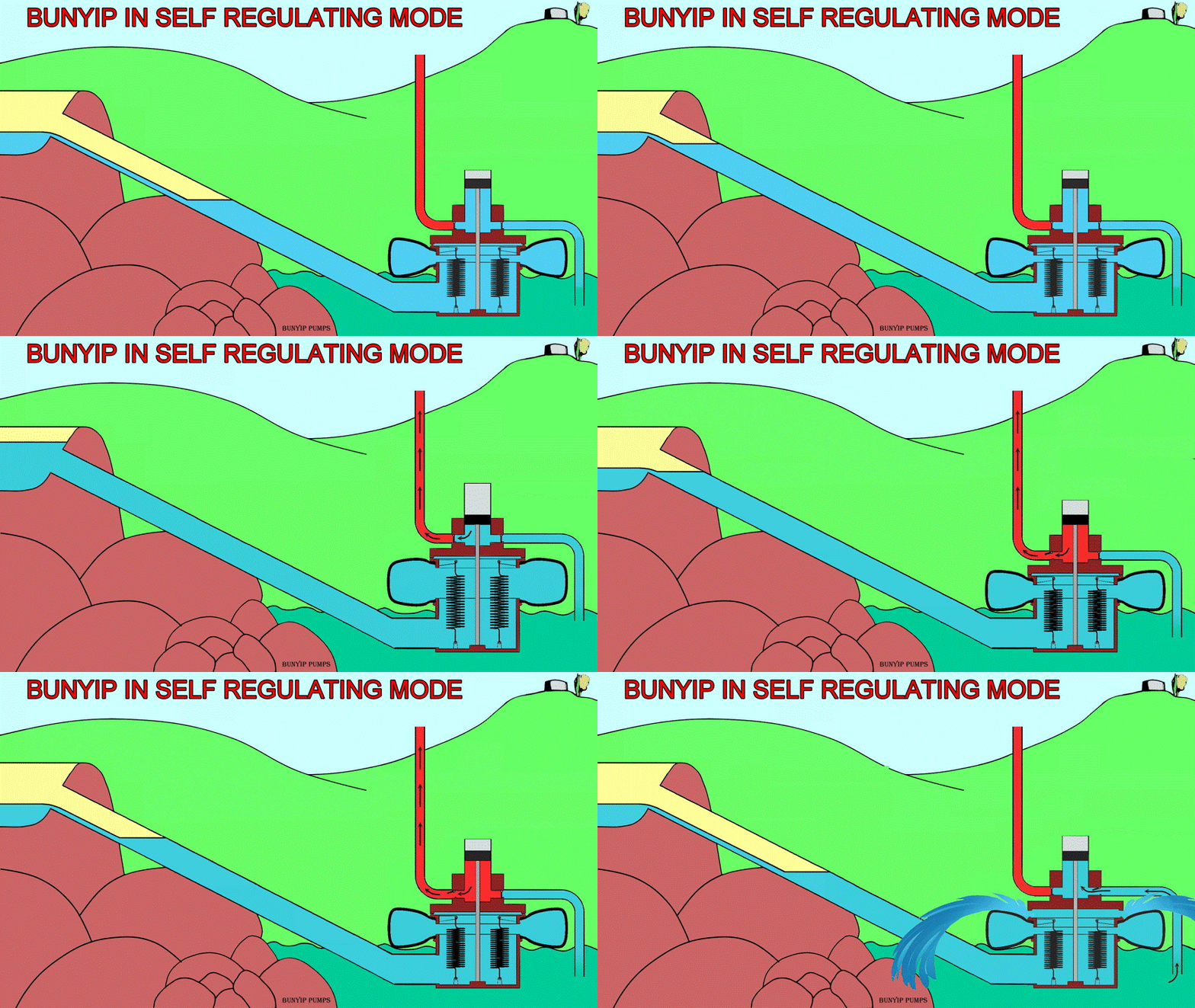
1. Water source · 2. Fall · 3. Bunyip Pump · 4. Delivery pipe — matching the steps below
Water starts at your source (river, spring, tank) located at a higher elevation.
Your water source must be higher than where you want to deliver water. This elevation difference creates the energy for the pump.
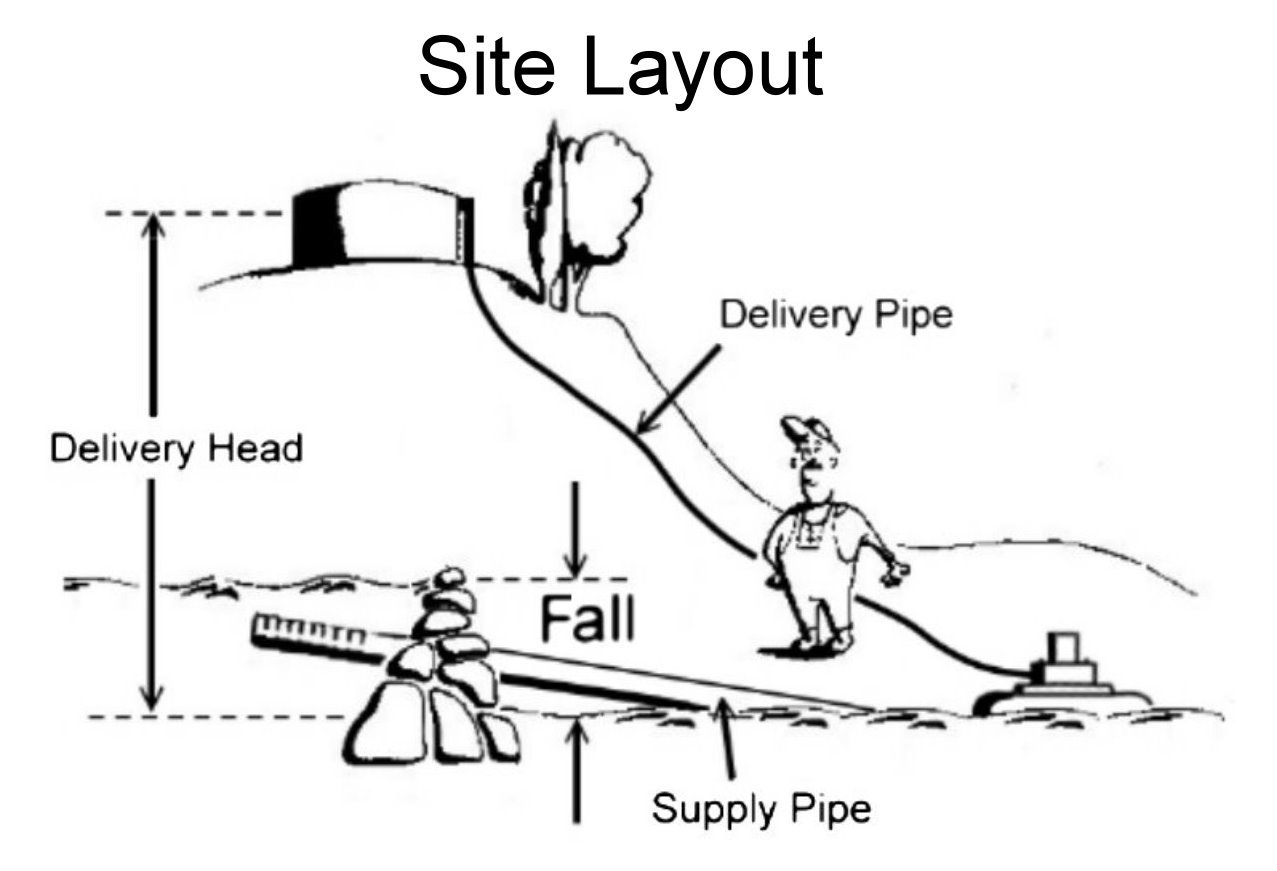
Water flows downhill from your source using natural gravity.
The larger the elevation drop (fall height), the more energy available to power the pump.
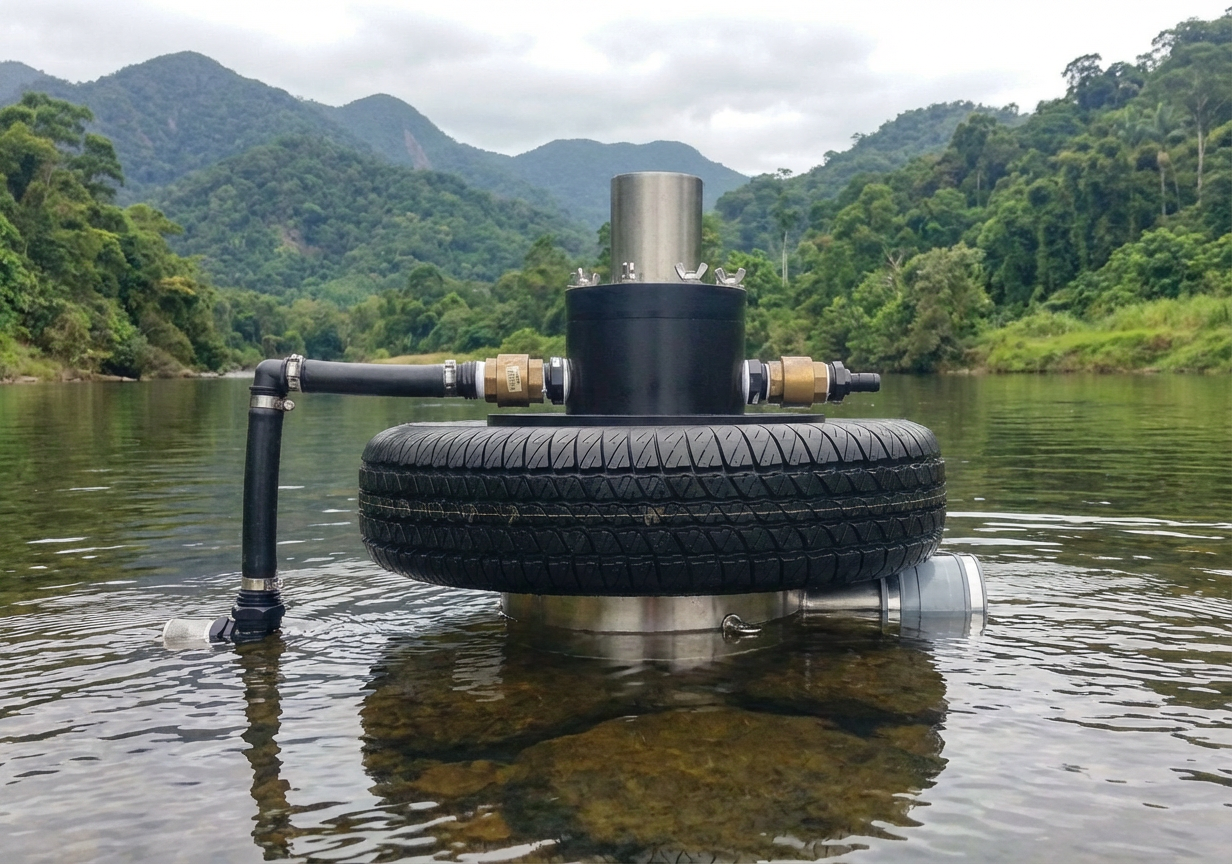
The Bunyip pump harnesses this gravitational energy to move water.
No electricity needed. The pump is powered entirely by the falling water.
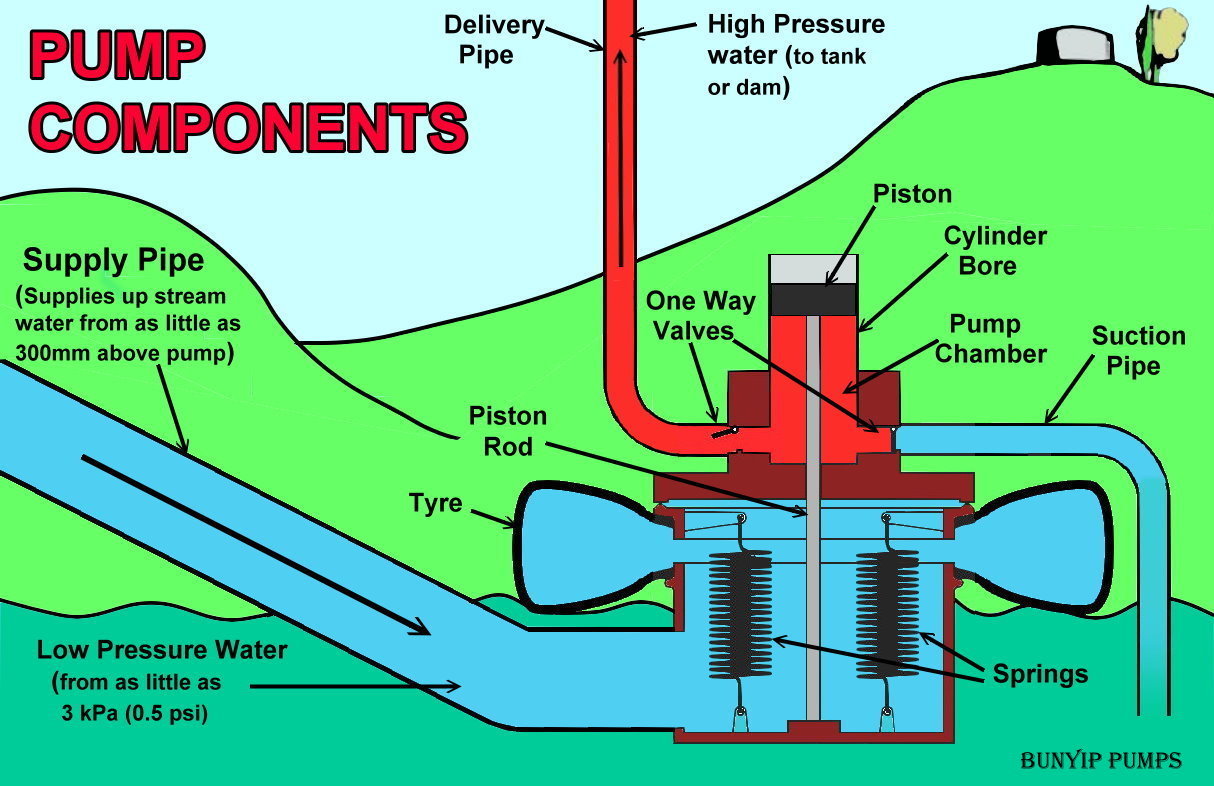
Water is delivered to your destination, even uphill.
The pump can lift water to elevations higher than your source, depending on fall height and water flow rate.
Common questions about gravity-powered water pumping
It depends on the model: our Bunyip Pump 13 works with a drop as low as 30 centimeters, while the Bunyip Pump 8 needs at least 2 meters. Optimal performance is between 1-3 meters. Use our calculator to check which model fits your site.
It depends on the model: up to 4 L/s for the Bunyip Pump 8, up to 8 L/s for the Bunyip Pump 13, and up to 16 L/s for the Bunyip Pump 16 — daily output also depends on your fall height and available flow rate.
Explore our product lineup and find the perfect gravity-powered solution for your needs.